Lung Abscess
Advanced diagnosis, treatment, and care for pulmonary abscess with comprehensive respiratory support
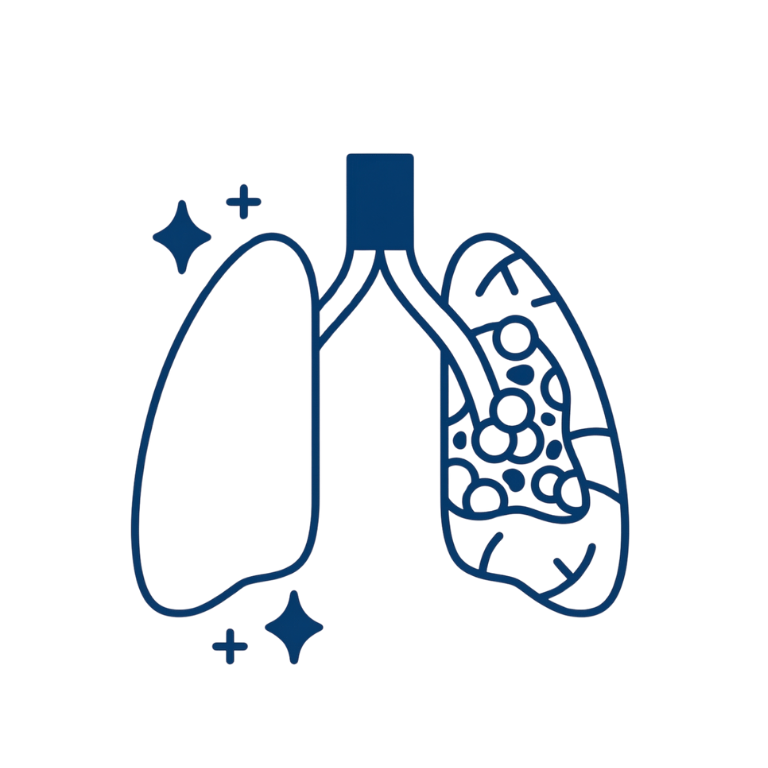
What is Lung Abscess?
Lung abscess is a localized collection of pus (necrotic tissue) within the lung parenchyma, typically caused by bacterial infection. It often results from aspiration of oral secretions, pneumonia complications, or underlying conditions like bronchiectasis or lung cancer.
Lung abscesses are classified as primary (occurring in healthy individuals) or secondary (associated with underlying conditions). Early diagnosis and appropriate treatment are essential to prevent complications.
Types of lung abscess:
Primary (Simple)
Occurs in otherwise healthy individuals, usually due to aspiration or pneumonia.
Secondary (Complicated)
Associated with underlying conditions such as bronchiectasis, lung cancer, or immunocompromised states.
Causes & Risk Factors
Common Causes
- Aspiration of oral secretions
- Complicated pneumonia
- Bronchiectasis
- Lung cancer with necrosis
- Septic embolism
Risk Factors
- Alcohol use disorder
- Neurologic disorders (stroke, seizure)
- Poor dental hygiene
- Immunosuppression
- Periodontal disease
Important: Early diagnosis and treatment significantly improve outcomes and prevent complications.
Common Symptoms
Symptoms typically develop gradually over weeks to months.
Respiratory
- Chronic productive cough
- Foul-smelling sputum
- Hemoptysis (coughing blood)
- Chest pain
- Shortness of breath
Systemic
- Fever and chills
- Night sweats
- Weight loss
- Fatigue and malaise
- Clubbing of fingers
🚨 Seek emergency care if you have:
- Massive hemoptysis (large amount of blood)
- Severe shortness of breath
- Signs of sepsis (high fever, confusion)
Diagnosis
- Chest X-Ray: Initial imaging showing cavity with air-fluid level.
- CT Scan: Gold standard for precise localization and characterization.
- Sputum Culture: Identifies causative organisms.
- Blood Tests: CBC, inflammatory markers (CRP, ESR).
- Bronchoscopy: For sampling and ruling out malignancy.
Treatment
Antibiotic Therapy
First-line treatment with broad-spectrum antibiotics covering anaerobes (e.g., clindamycin, amoxicillin-clavulanate). Treatment duration: 4-6 weeks or longer.
Percutaneous Drainage
CT-guided catheter drainage for large abscesses not responding to antibiotics.
Bronchoscopic Drainage
For central abscesses accessible via bronchoscopy.
Surgical Resection
For cases failing medical therapy or suspected malignancy. Lobectomy or segmentectomy may be required.
Complications
- Empyema (pus in pleural space)
- Bronchopleural fistula
- Massive hemoptysis
- Sepsis
- Brain abscess (hematogenous spread)
- Amyloidosis (chronic cases)
Prognosis
Antibiotic success rate
Resolve with medical therapy
Surgical intervention rate
Why Choose Our Pulmonary Center?
Board-certified pulmonologists with advanced respiratory care expertise
Expert Pulmonologists
Specialized in lung abscess care
Advanced Imaging
CT-guided procedures
Interventional Pulmonology
Bronchoscopic drainage expertise
Comprehensive Follow-up
Long-term monitoring
Request a Callback
Get expert advice within 24 hours
Other Treatments
Explore our specialized services
Emergency Contact
+91 813-044-8904
24/7 available for respiratory emergencies